
Newark Previous Residents by Era
Previous residents of a Newark address are best traced with a dated chain, not a single name search. Start with the parcel identity and the most recent recorded instrument, then move backward through the Recorder, Records & Archives, library directories, and census records. Each source has a different time range and purpose. A deed connects parties to a property transaction. A directory or telephone book is a published name-and-address or subscriber snapshot. A census is a historical household view. Sanborn maps establish building and block context, never occupants.
| Source | Years It Covers | Where Held | What It Shows |
|---|---|---|---|
| Recorder online documents | Recorded since Sept. 22, 1997 | Recorder public-access route | Modern instrument and document sequence |
| Recorder General Index | Early 1800s forward | 20 S. Second St., Newark | Historical index books and computerized history |
| Records & Archives deed holdings | 1803–1918 | Licking County Records & Archives | Deed volumes and loose deeds |
| Records & Archives mortgage holdings | 1851–1941 | Licking County Records & Archives | Mortgage trail |
| Library directories and telephone books | Directories 1858–2020 with gaps; telephone books 1959–2020 | Licking County Library | Dated household, location, or subscriber layer |
| Federal census and Sanborn maps | Census public after 72 years; local Sanborn film 1884–1920 | National Archives, library, and map collections | Household snapshot or building and block context |
For a newer transfer, begin with the property record and instrument. For an older chain, the counter and Archives are often the next step. A directory or census entry adds people to an address timeline, but it does not turn into property title. Keep the source and year beside every name so later comparisons remain clear.
Start Newark Previous Resident Research
The Licking County Tax Parcel Viewer is the current parcel starting point. Search with an abbreviated address, a Last, First owner pattern, or an Auditor PIN. After selecting the correct parcel, preserve the Auditor PIN, Engineer PIN, site or street address, owner-name format, Official Record, acreage, lot or subdivision fields, and legal description. The Viewer supplies a route into a document trail, not a list of everyone who lived at the address.
Keep the situs or street address separate from an owner mailing address. The county’s official parcel schema distinguishes them, and a mailing address does not establish who occupies the property. Likewise, an owner-occupied or homestead field is property-status evidence, not a household roster. The stable parcel identifiers and legal description are more reliable than a surname when an old street form changes or two names are similar.
A useful Newark flow is: address or PIN → parcel identifiers → Official Record or instrument → recorded parties and legal description → prior instrument → dated directory or census layer. That order keeps property facts and household clues from being blended together.
Trace Newark Previous Residents Backward
The backward deed chain begins with the selected parcel, then tests each conveyance against the property’s legal identity. Open the current Official Record or recorded document and record the document or instrument number, recording date and time, document type, grantor, grantee, legal description, and page count. Search the current deed’s grantor as a potential prior grantee in the Recorder’s PAX Name Search. Use date or Advanced/Legal filters where the result list needs narrowing.
- Search the Viewer by normalized address or PIN and copy both parcel identifiers, the Official Record or instrument, and the lot or subdivision details.
- Read the current recorded document, preserving its parties, date, legal description, instrument number, and book or page reference where present.
- Search the current grantor as a possible earlier grantee, then compare the legal description, lot, block, subdivision, book or page, and parcel context.
- Repeat that comparison one conveyance at a time. Do not bridge an era only because a surname is similar.
- When a reference uses a book and page, use PAX Instrument mode for the instrument number or Book/Page and select Include Cross References when needed.
- If the online document route ends, continue at the Recorder General Index and then at the historic deed volumes held by Records & Archives.
- Grantor
- The party conveying an interest in a recorded document. In a backward search, a later grantor can be a lead to an earlier grantee record.
- Grantee
- The party receiving an interest in the document. The name must still be checked against the parcel and legal description.
- Chain of title
- The sequence of recorded property transfers connected by the same legal identity, not merely a string of matching surnames.
- Legal description
- The lot, block, subdivision, plat, or other property description used to compare recorded instruments when street labels shift.
Newark Previous Residents Offline
The Recorder states that documents available online were recorded since September 22, 1997. That is an online document statement, not a published start date for every PAX name-index mode. Do not treat 1997 as the beginning of the Recorder index. The office says its in-person General Index has hundreds of index and record books, computerized historical information, and records reaching into the early 1800s. Public searching at the counter is free.
The Recorder’s online-document coverage notice distinguishes web access from the longer in-office record trail.
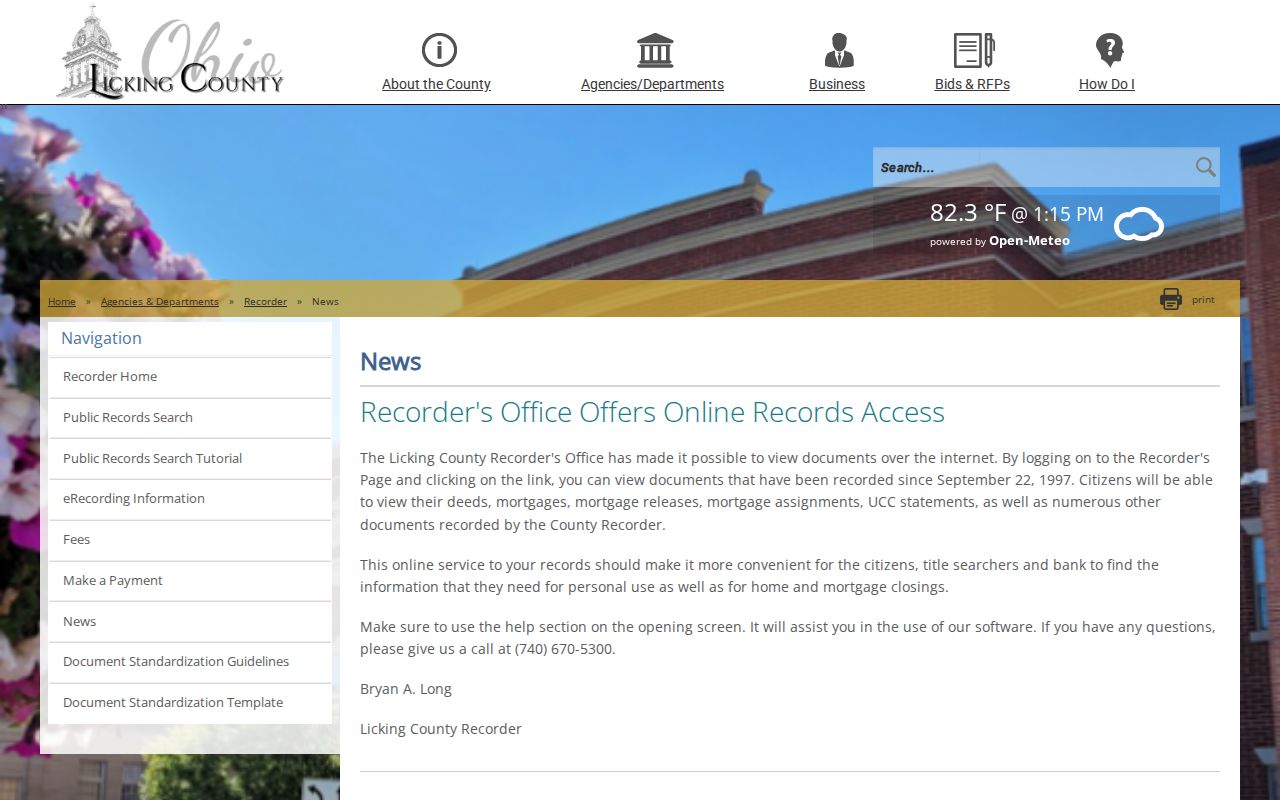
When a digital result is incomplete, the Newark Recorder counter at 20 S. Second St. is the documented fallback for historical index research.
Records & Archives holds deeds for 1803–1918 and mortgages for 1851–1941. Those holdings give a defined archive route when the needed transaction is older than the current web document coverage or when an instrument chain requires original historic volumes.
Newark Previous Residents in Archives
Historic deed and mortgage material belongs at the repository that holds the series. Licking County Records & Archives preserves historic county-government records, while the library holds the local directory, telephone-book, newspaper, and map layer. That division matters for a Newark address history. A recorded deed can establish parties to a conveyance; a printed directory may supply a separate, dated person-and-address clue.
The Records & Archives Recorder holdings identify the historic deed and mortgage collections.
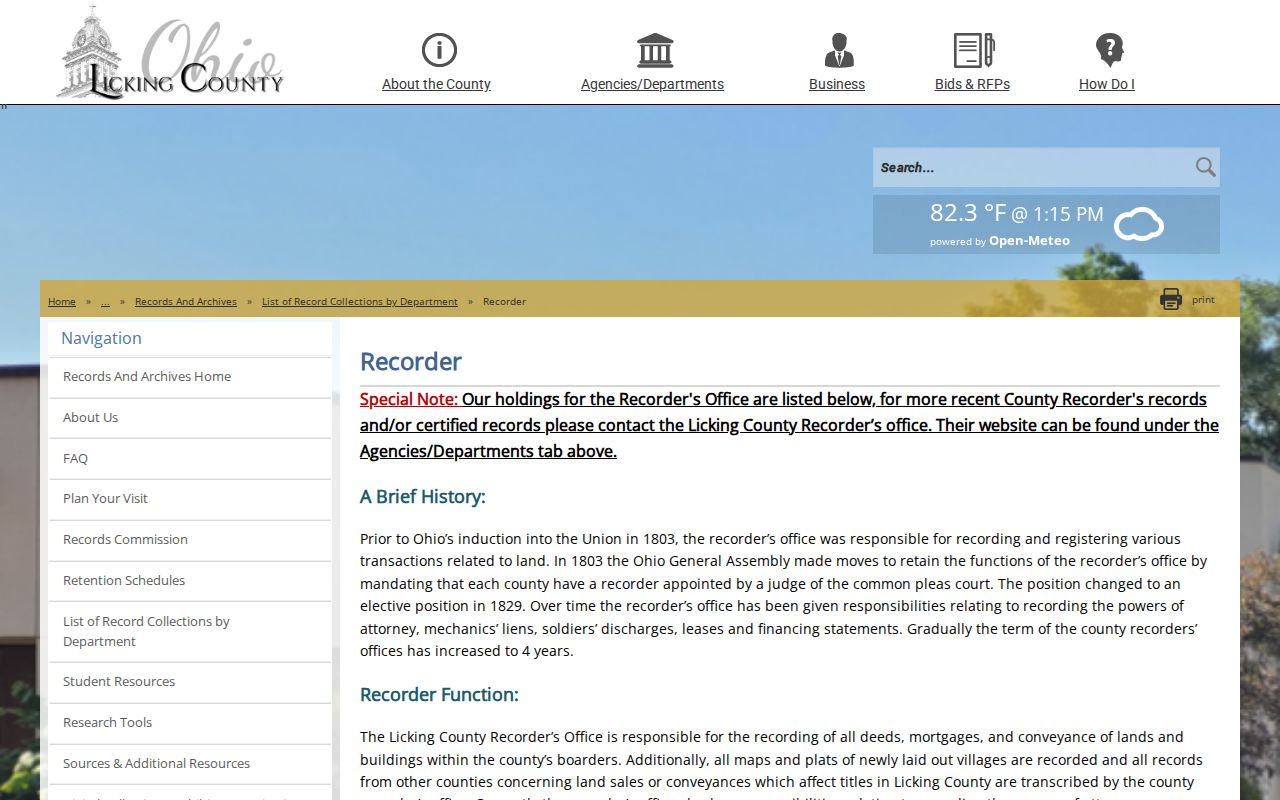
Use the instrument number, book and page, legal description, and known date range when requesting or locating a historic volume.
A property owner is not automatically a resident. The distinct layers matter especially where a deed names a party who lives elsewhere, a directory names a person at the street address, or a telephone book names only a subscriber. The strongest conclusion states which layer supplied each fact.
Note: Preserve the legal description at every step, because it is the key that ties a Newark parcel to recorded instruments across changing names and addresses.
Newark Previous Residents in Directories
Licking County Library’s physical Newark directory run spans 1858–2020 with listed gaps, and its telephone directories span 1959–2020. The library also lists intermittent Newark directory coverage in microfilm and in-library database sources. These materials add a dated household or subscriber layer to a property timeline. They do not prove title, current occupancy, or that every person at a home appears in a volume.
Choose the directory edition nearest the event, copy the name and street form exactly, then compare an adjacent edition. Polk’s Licking County Cross Reference Directory is verified for 1996 and 1997, which makes those years a documented address-to-name check. For the full collection chronology and edition-reading limits, use the Newark directory book.
Household pairing flow: directory year and printed street form → adjacent edition → ward or map context → census household after the 72-year release period → dated newspaper, probate, or cemetery lead when an event needs confirmation.
Pair a directory sequence with a federal census page. Census data is public after 72 years, and the library lists Licking County census microfilm for 1820–1880 and 1900–1920. Use the directory year, street form, ward context, and maps to select the correct household candidate. A census household may include people not found in a directory, while a directory can place a name between census years.
Newark Previous Residents on Maps
Sanborn maps give an address a physical setting. Licking County Library lists Newark Sanborn microfilm for 1884, 1889, 1893, 1899, 1905, 1912, and 1920. Library of Congress examples include a 1920 edition with 87 sheets and a 1920–December 1961 edition with 93 sheets. These maps can show building and block configuration at a date. They do not name the occupants of the structure.
The 1875 courthouse fire is a major break in Newark historical research. Many early county records stored in the courthouse attic were destroyed, but surviving books, fragments, transcriptions, maps, and newspapers remain useful. When an early original is absent, treat the gap as a reason to check those alternate sources, not as proof that no prior resident or transaction existed.
Maps can also help with old street forms. The library’s local collection includes an 1817 Newark plat, a c. 1910 city map, a 1952 street map, a 1957 annexation map, a Newark/Heath map, a 1950 zoning map, and a street index. Use those geographic clues beside the legal description before deciding that two address labels refer to different places.
Newark Previous Residents at Cedar Hill
A house trail sometimes ends with an estate, obituary, or burial lead. Licking County Records & Archives preserves historic probate material, including administrator and executor records, inventories, and other dated series with their own access limits. Those files can identify estate actors or an event context. They should not be used to turn a historical estate reference into a claim about a current address.
The Records & Archives Probate holdings describe the historic probate routes.
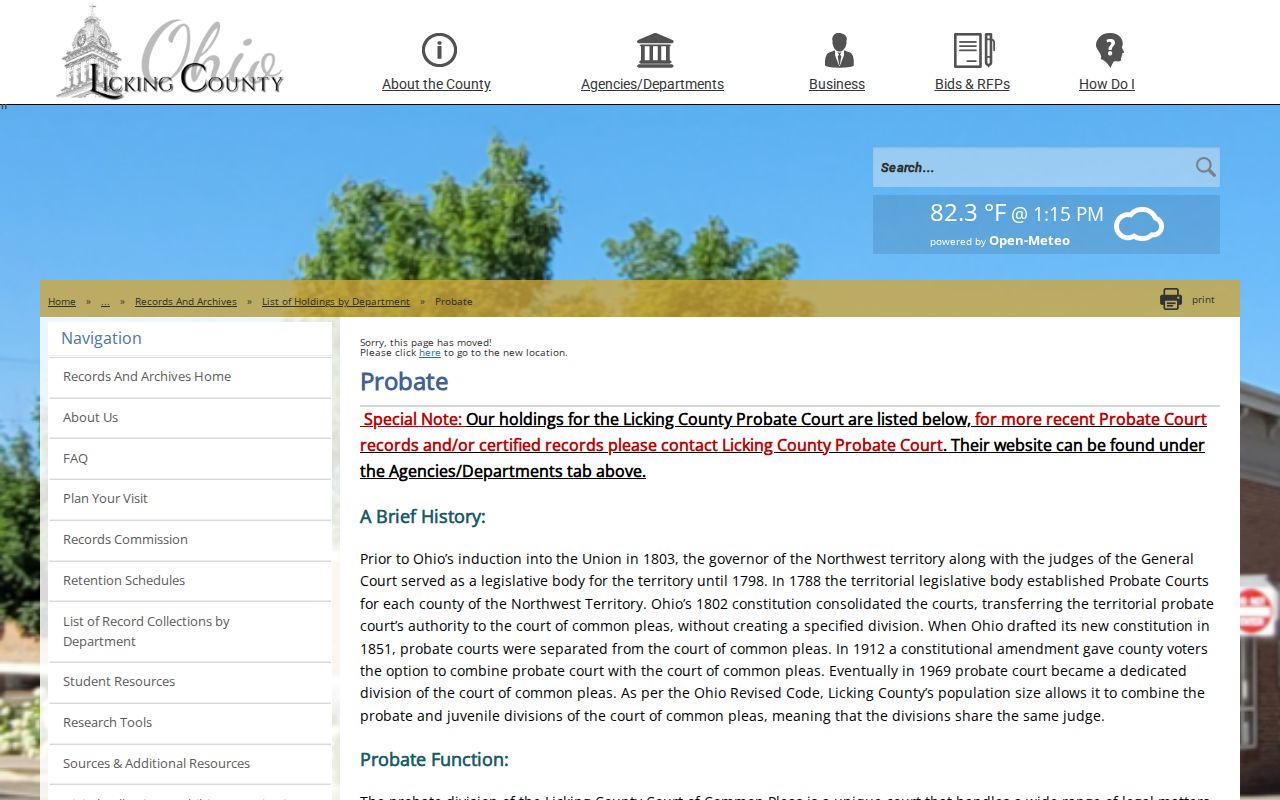
A probate index or file works best as a dated lead that can be checked against a deed, directory, newspaper, or cemetery record.
Cedar Hill Cemetery is a City-operated historic genealogy resource with a Search for a Loved One path, cemetery maps, and a genealogy contact. It can provide burial location, family-lot context, and a death-era clue. It is not evidence that a person currently lives at a related street address.
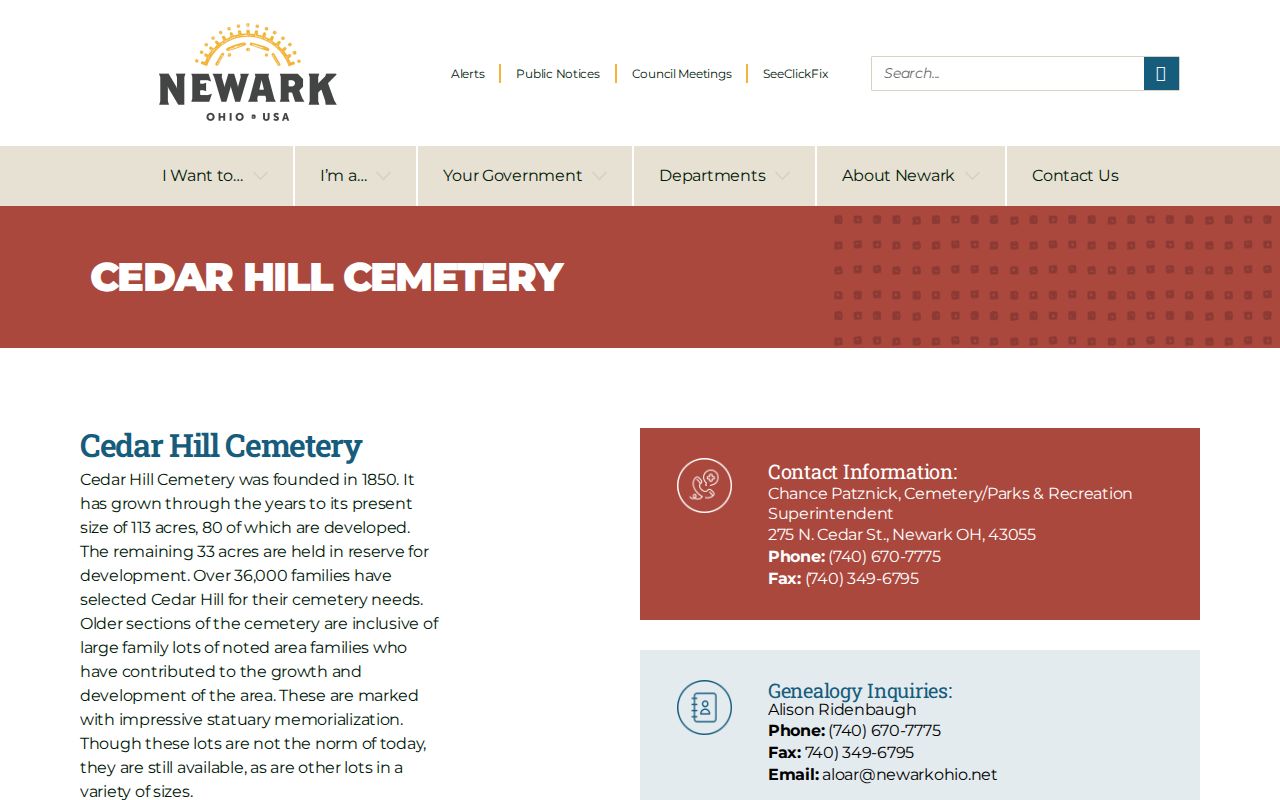
Cedar Hill can help close a historical family trail after the address record has been dated with independent property and household sources.
Newark Previous Residents Lawful Use
House history, family research, estate questions, and neighborhood curiosity are valid reasons to separate old property records from household clues. Keep findings limited to the historical question, verify important records with the custodian, and respect records that are restricted or protected. Public availability is not permission to monitor, threaten, repeatedly contact, or harm another person.
For a Newark address, a careful conclusion distinguishes the underlying evidence: a recorded party, a directory listing, a subscriber, a census household, a probate participant, or a cemetery reference. That restraint makes the trail more useful to a family researcher and less likely to misidentify someone.
Note: A missing name, online result, or record image does not prove absence, especially across the documented holdings gaps and the 1875 fire.