
Finding Newark Resident Records
Newark serves as the Licking County seat. The main property, recorder, court, archive, and library routes sit close together. Yet they do different jobs. Match the source to the question. An address suits a parcel question. A full name suits a registration, court, or historical directory lead. A parcel owner, a voter registration, a court party, and a directory listing are not interchangeable facts. The best match is the one carrying the right date, address, legal description, or case context.
Keep the order simple. Preserve exact spellings, suffixes, and addresses exactly as each record displays them. Then compare independent sources. A person can own property without living there. A dated directory is not a current roll. A court name does not confirm an address. When a source is not online, the responsible office, Records & Archives, or the library supplies the next route. That is the next route for a Newark resident lookup.
- Use the county parcel viewer for a normalized address, owner name, or PIN.
- Keep the parcel’s site field, legal description, and transfer reference together.
- Check the Recorder for the instrument and parties behind a transfer.
- Use Ohio’s individual voter tool or the court portal only for their stated purposes.
- For past households, compare a library directory year with the deed and census trail.
Newark Resident Record Custodians
Official Newark property, deed, court, and historic government records live in Licking County offices. The Auditor links a parcel to assessment and transfer context. The Recorder preserves instruments and a historical index. The courts hold cases and channels for certified copies. Older series fall back to the county archive. The Downtown library keeps local directories, maps, newspapers, and microfilm that government archives do not collect.
The office that created a record stays the right contact for a copy. It also handles certification or correction. Going direct beats using one record to guess at another. For address-by-address work, the Newark street directory offers a fuller treatment of the street chain.
Licking County Recorder
20 S. Second St.
Newark, OH 43055
740-670-5300
Recorded-document and index custodian
Licking County Auditor
20 S. Second St.
Newark, OH 43055
740-670-5040
Tax Parcel Viewer custodian
Ohio Voter Information
Statewide individual lookup
Choose Licking County
County contact via state directory
Named registration lookup
Note: A precise parcel, instrument, or case reference gives a custodian far more to work with than a broad request for a person's name.
Newark Parcel Records by Address
For an address or property-owner question, the Licking County Tax Parcel Viewer is the direct public starting point. It accepts the start of an address, an owner query in LastName, FirstName form, or an Auditor PIN. Direction and road-type abbreviations matter in address entry. A selected parcel can be measured, buffered, added to a survey list, turned into a report or map, and downloaded through a CSV-oriented workflow.
Keep the record's separate property ideas distinct. The site address tells where the parcel sits. A mailing field tells where the owner receives mail. Transfer fields tie land to a recorded instrument. Owner-occupied and homestead flags give property-status context, but they do not list everyone in the building. Use the exact field the public record shows rather than relabeling it in a Newark residents directory search.
| Viewer field or control | How Newark uses it | Practical limit |
|---|---|---|
| Address search | Enter the beginning of a standardized address, then choose a suggestion. | It identifies a parcel, not every household member. |
| Owner search | Use LastName, FirstName, with a space after the comma. | An owner can have a different mailing address. |
| Auditor PIN | Enter with no spaces or in the displayed PIN pattern. | It is a property identifier, not a person identifier. |
| Buffer and survey | Select a parcel, set feet, then review nearby parcels or reports. | Nearby parcels are not a roster of residents. |
The official viewer is useful because its address, owner, and PIN routes each lead to a stable parcel record.
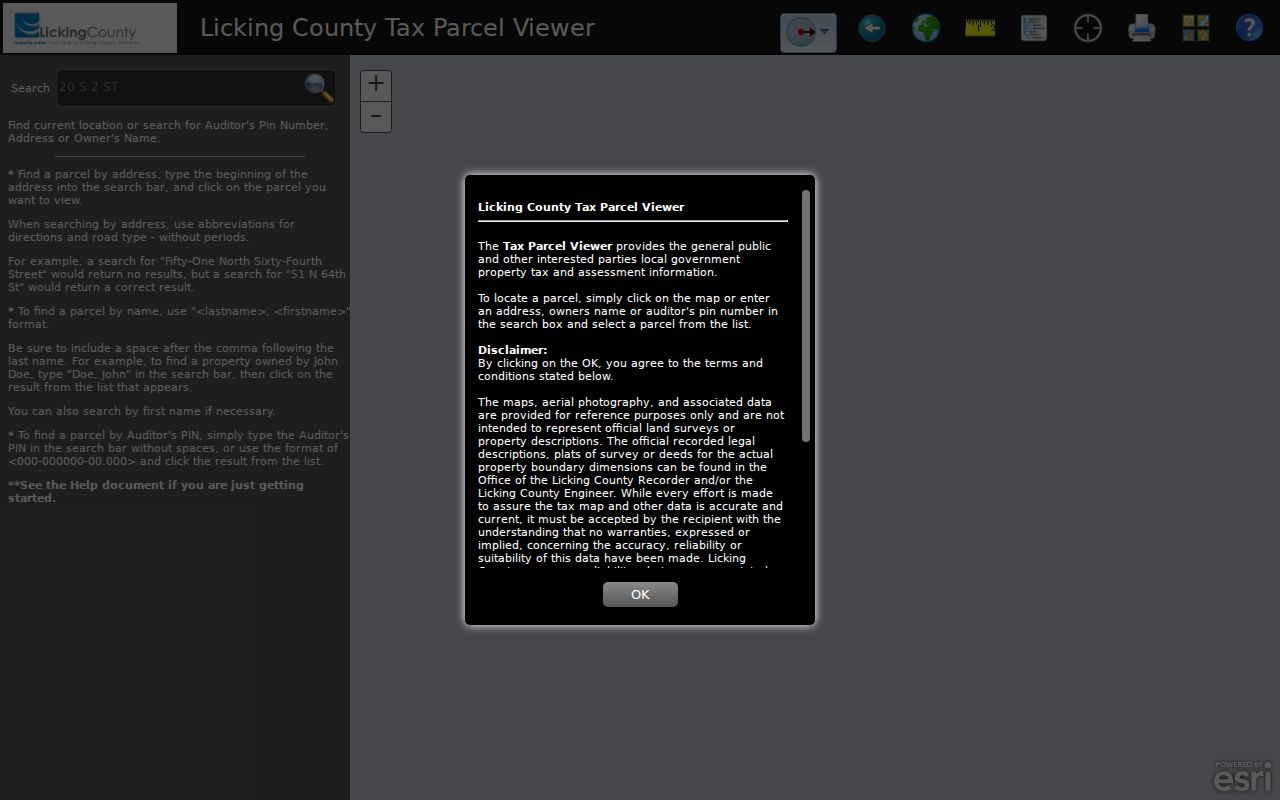
Keep parcel, situs, mailing, and transfer fields distinct before a name moves to another index.
Newark Recorder Record Trail
The Recorder's current PaxWorld access page asks users to create an account or sign in. Saved searches and a cart come with it. That online layer is not the whole historical route. The free in-office General Index includes hundreds of index and record books. It adds computerized history and material reaching back to the early 1800s. Document, book, plat, and fax-copy requests run through Micrographics.
For an ownership trail, copy the parcel's transfer instrument and legal description. Locate the recorded document. Identify grantor and grantee, then test the prior transaction against the same legal description or lot context. Recorded documents can carry parties, recording information, legal descriptions, parcel references, and cross-referenced instruments. The index is only a finding aid, so the document itself matters. Repeating that comparison lowers the risk. It avoids joining unrelated people who share a surname in a Newark deed search.
- Parcel
- A tax-map unit identified by a PIN and linked to a particular piece of land.
- Instrument
- A recorded document number or book-and-page reference used to locate a deed or related filing.
- Grantor and grantee
- The party transferring an interest and the party receiving it in a recorded conveyance.
- Situs address
- The property’s physical location, which may differ from an owner mailing address.
The Recorder public-access screen shows the account-based entry point for the current online experience.
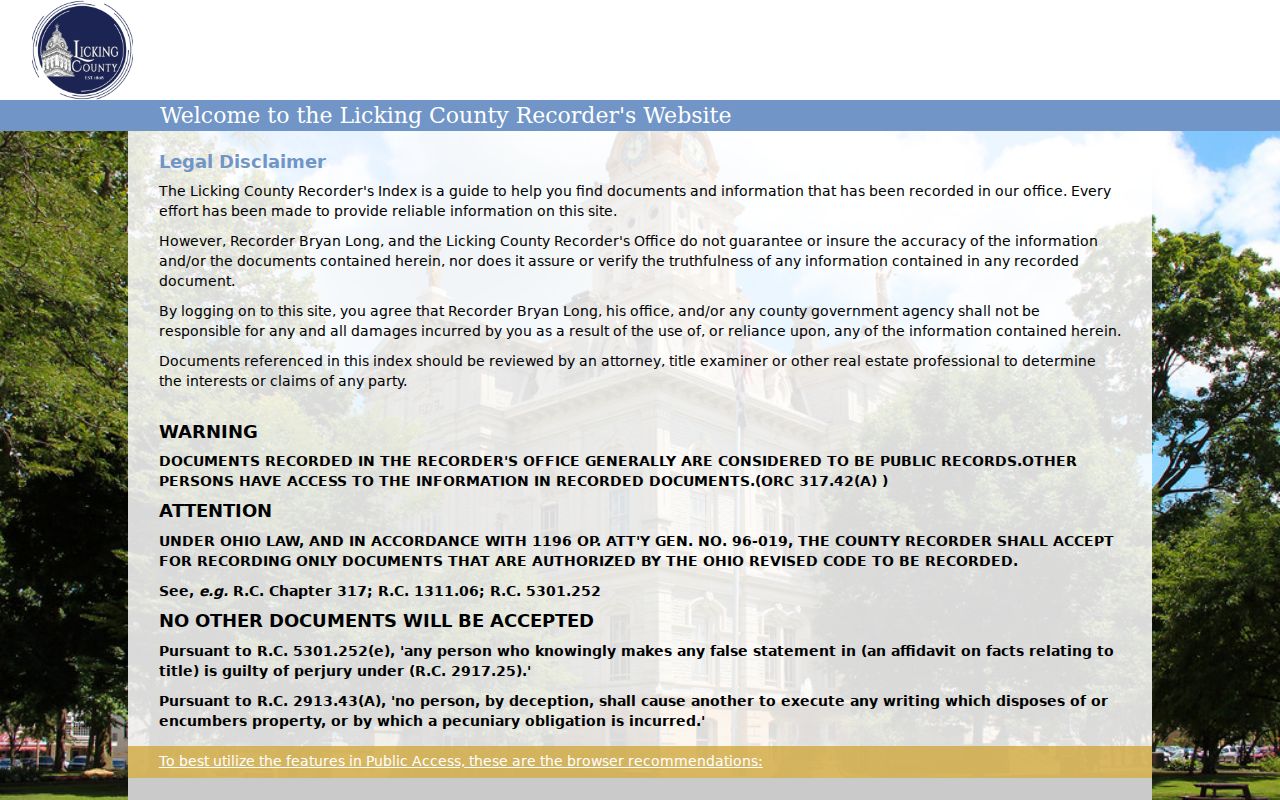
For a difficult or early title question, the free counter index is the documented alternative. It stands in for the online account route. It reaches the record books the online layer does not. A Newark residents directory trail often depends on these older instruments.
Note: Online document viewing is stated for instruments recorded since September 22, 1997, not as a universal start date for every Recorder name index.
Newark Voter Record Checks
Ohio My Voter Information is a named-person lookup. It is not a browseable roster of a Newark street. It requires First Name, Last Name, and County, with Licking selected for Newark. The state suggests retrying a nickname or derivative first name when an expected registration does not appear. It also suggests a former surname, or an earlier address in another county. A nonmatch is not proof of no Newark connection.
| Search field | Requirement | Use |
|---|---|---|
| First Name | Required | Use the person’s name; a derivative may be worth a separate retry. |
| Last Name | Required | Try a former surname as a separate search where relevant. |
| County | Required | Select Licking County for a Newark search. |
| Street name | Conditional | The state notes a post-search narrowing control. |
Ohio releases a fresh voter-registration snapshot for every county each day through its DATA Act File Search. R.C. 149.43 makes those files public records. Protected fields and confidential voter records stay out of them. The state keeps each snapshot for at least 22 months after an election, and a custom file request follows its own delivery and expiration process. Treat this as public-record context rather than a stand-in for anyone's privacy or safety.
Newark Court Record Names
A court party search links a name to a case and a time period. It does not prove where that person lives now. The Common Pleas public portal lets you search by Name, Case Number, or Case Type. Its person search requires a first and last name. An optional middle name and case-type filter narrow it. In June 2025 the Clerk moved to a new case-management and records-viewing platform. Current clerk instructions outrank older screen directions.
Not every category appears online. The General Division at 1 Courthouse Square, 740-670-5791, and the Domestic Division at 75 E. Main St., 740-670-5392, are the stated counter alternatives. Probate CaseLook also warns that entries before 1991 may be missing from the web. Probate Court and Records & Archives help route estate and historic material. Restricted adoption, medical, and other confidential series stay closed. A useful confirmation lead needs a party role, a case number, and a date.
Current Newark Resident Sources
No single official roll proves every Newark household. Each source below offers a different kind of evidence. A current parcel result gives property context, an official voter tool checks a named registration, and a recorded instrument documents a transaction. When a record comes back incomplete, every route still has a channel beyond the screen, whether a counter search, a library collection, an archive request, or a call to the named custodian.
| Newark source | What it can support | Custodian | Access route |
|---|---|---|---|
| Tax Parcel Viewer | Parcel owner, site address, legal and transfer context | Licking County Auditor | Free owner, address, or PIN search |
| Recorder index | Parties to recorded instruments | Licking County Recorder | Account-based web entry; free General Index at the office |
| My Voter Information | Named registration and precinct/polling context | Ohio Secretary of State | Required first name, last name, and county |
| Common Pleas portal | Party, case type, and case-era lead | Clerk of Courts | Web portal and division counters |
| Ohio eLicense | Professional credential identity/status lead | State licensing boards | Official eLicense route |
Commercial people-finder sites compile public sources, but their results still need verification at the official custodian. A question about a seller, a relative, or family history is better answered by comparing the original roll, instrument, or published volume. Working from separate sources also makes a common-name mismatch easier to spot before it hardens into a wrong claim.
Newark Archive Record Routes
A web search can dead-end fast. Licking County Records & Archives offers a concrete route into historic material. The office takes appointments, phone and email requests, and public-record research at 61 E. Main St. Its published coverage spans many Clerk case files from before 1992. Deeds, mortgages, probate series, and other county-government records are also covered. Certification stays with the originating court or office. So follow an archive find with the right custodian for a certified copy.
Researchers should come with a record series and a date range. One all-purpose name search does not exist. The office email is records@lcounty.com. The phone is 740-670-5121, and listed hours run Monday through Friday, 8:00 a.m. to 4:30 p.m. The Records & Archives page is the starting point for that channel. County holdings differ from the library's directory and newspaper collections. Let the subject and date drive the choice.
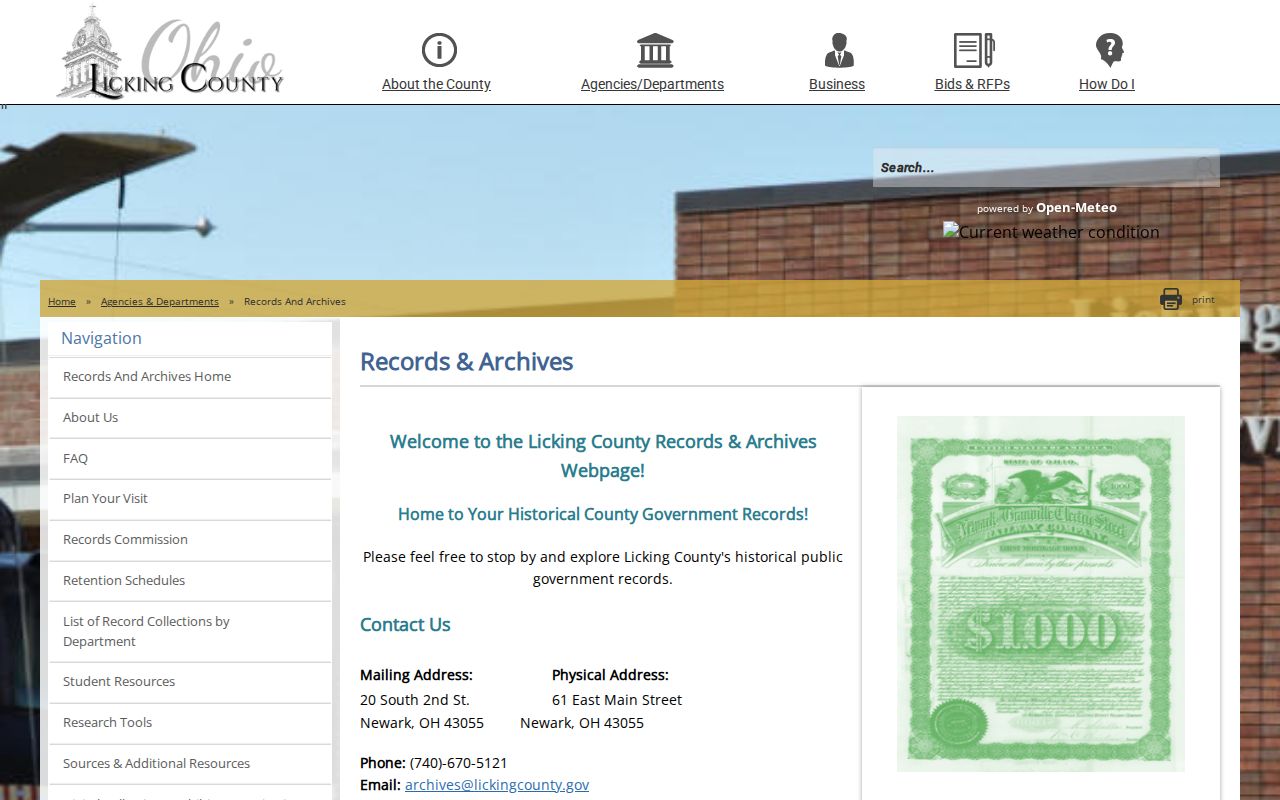
Records & Archives is especially valuable when the court, probate, deed, or local-government series you want predates the public interface.
Historical Newark Resident Directories
The Licking County Library's Local History collection keeps physical Newark city directories from 1858 through 2020. The gaps are documented. Selected years also exist on microfilm and through in-library Ancestry Library Edition. The library also holds Polk's Licking County Cross Reference Directory for 1996 and 1997. Newark-Licking County telephone directories run from 1959 through 2020. Remember that a printed entry is a dated snapshot. It is not proof of title or a current household.
The Downtown location sits at 101 W. Main St. For older address work, pair the directory year with city maps and telephone books. Newspapers, cemetery material, and local census microfilm help too. The Newark city directory page develops the collection detail and a household-tracing method. Before assigning meaning to a volume's formatting, inspect its title and abbreviation pages.
Newark Records After the Fire
A courthouse fire in 1875 shapes nearly every search for early Licking County records. According to Records & Archives, much of what was stored in the courthouse attic burned. Some books, transcriptions, and fragments did survive, though. So a missing early court, probate, or vital record is not proof it never existed. Check coverage first. Treat the fire as a gap, not a verdict. Historic research works best when it starts with a named series. It should also note the years that series truly reaches.
For questions before the fire, set the county's surviving volumes beside the library's other tools. Those tools include directories, newspapers, tax microfilm, maps, and cemetery material. The library's city-directory run starts in 1858. Its local maps can also place an address. This helps when the form or setting has shifted over time. Because of this records history, any Newark result deserves a source and date attached. That matters most when different custodians cover different periods.
Newark Vital Record Trails
Vital records help with past residents, not current addresses. Keep that distinction in mind. Licking County Probate Court is the local channel for marriage records and certified copies. Records & Archives holds historic marriage material from 1875 to 1996. It also offers a transcribed index spanning 1809 to 1879. A courthouse fire destroyed many pre-1874 originals. The Licking County Health Department keeps local death material from 1907 forward. State and historical routes shift with the event year.
Newark’s city-run Cedar Hill Cemetery page offers a Search for a Loved One entry point. It also provides cemetery maps and a genealogy contact. Burial listings can add real family-lot context. Treat them as leads. Match a grave to a dated obituary, probate file, city directory entry, or certificate. Only then should you claim a Newark residence. The same care applies when a similar name appears in an estate or marriage index.
Statewide certificates run through the Ohio Bureau of Vital Statistics. Keep that office separate from Licking County’s local channels. That keeps a resident lookup pointed at the right custodian.
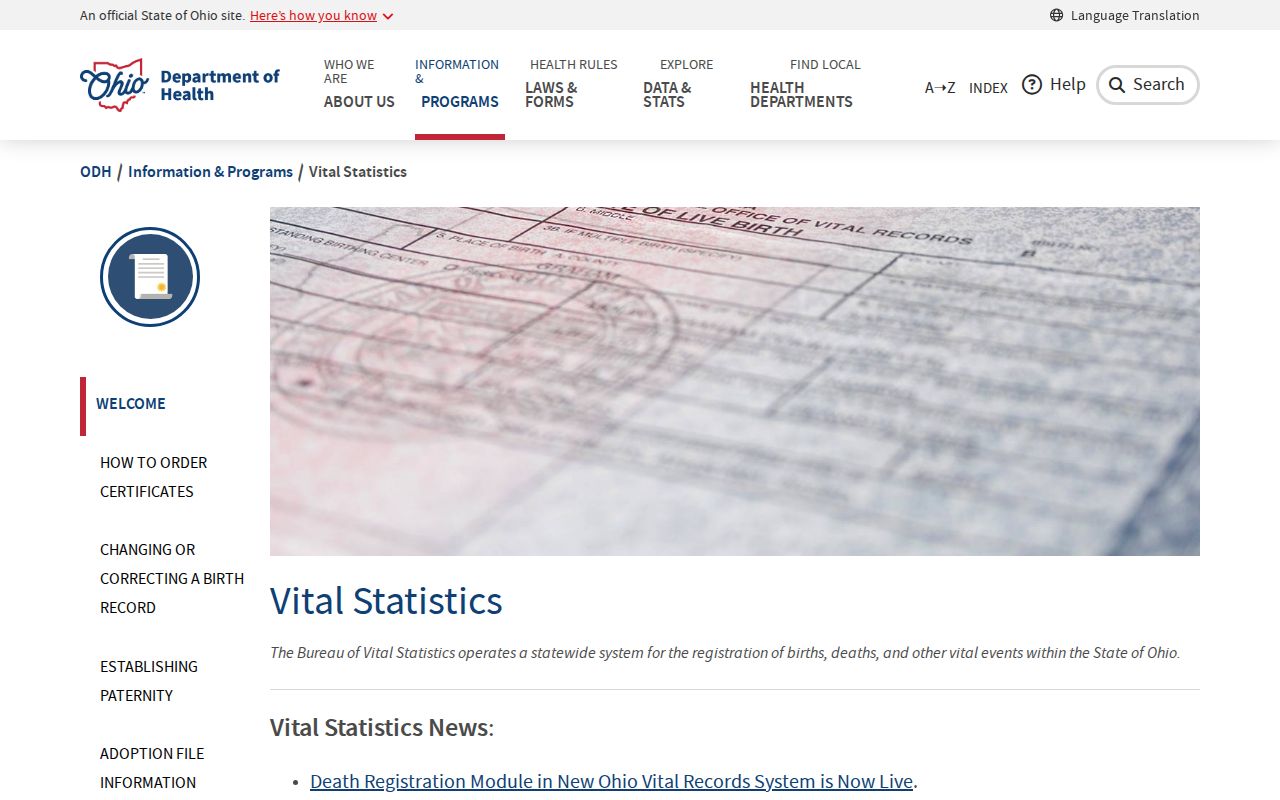
The event year and record type pick the next stop.
Ohio Public Records for Newark
Ohio’s Public Records Act, R.C. 149.43, is the fallback when an identifiable, nonexempt city or county record is not posted online. It never forces an office to create a new database or conduct an open-ended person search. Aim narrow instead. Name the office, the record series, and a practical locator. A parcel PIN works. So will an instrument number, case number, date, or council-meeting date. Vague asks stall. That focus helps a custodian steer you toward the right record series.
Qualifying records must be available for prompt inspection, with copies supplied within a reasonable period. The statute sets no fixed response-day promise. Inspection is free. Copying, delivery, or supply costs may be charged. Send a request that is too broad, and the office must offer a chance to revise it and explain how its records are organized. A denial requires a legal basis. Ask in writing for a written explanation.
The official R.C. 149.43 text is the governing source for the request process and exemptions.
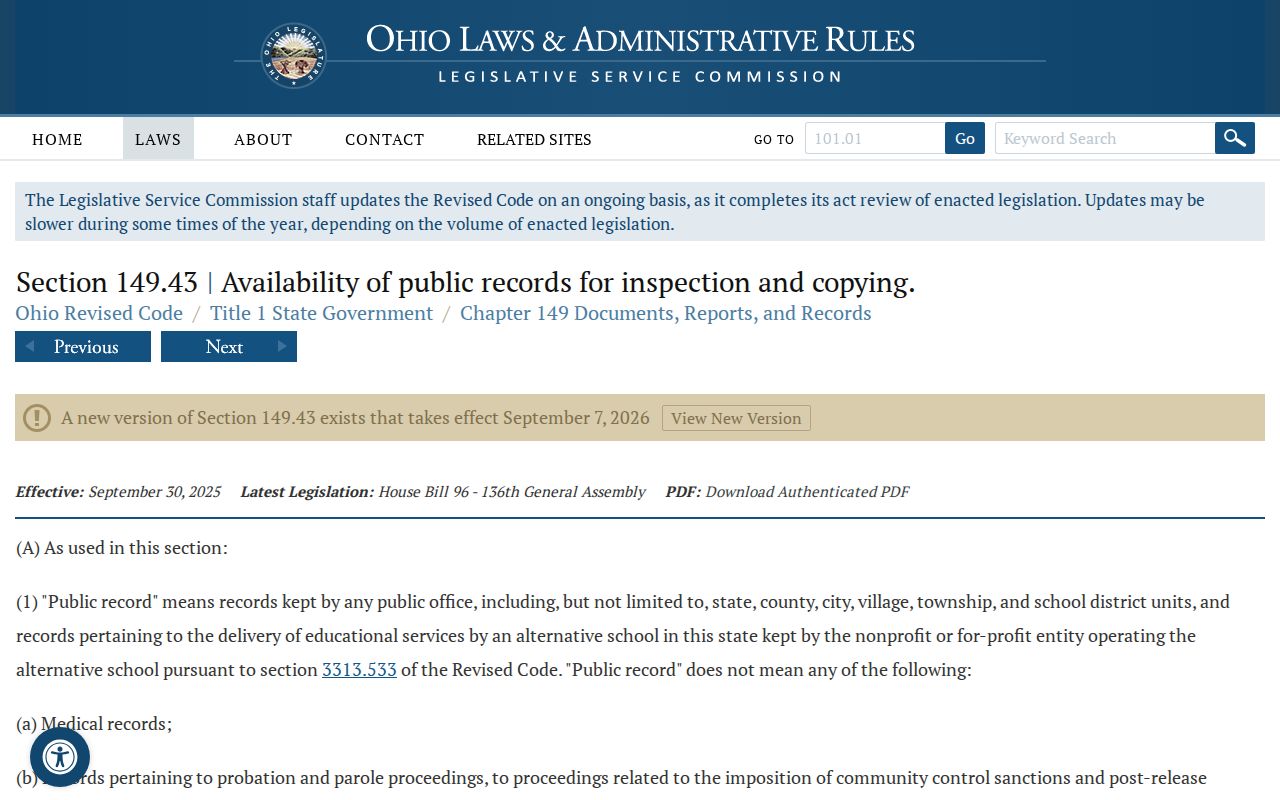
A targeted request fills the gap. When a record exists but its online image, index, or coverage is thin, ask the custodian directly.
Newark Resident Privacy Boundaries
Public access has limits. Ohio Safe at Home participants hold confidential voter records. Those records cannot appear in the public lookup or voter list. Ohio law also shields specific voter fields. Public offices must redact or protect Social Security numbers in online documents under R.C. 149.45. Newark's utility customer portal is account based, not a public resident roll. Motor-vehicle information cannot serve as an address-search fallback. These limits protect people whose location or identifying details must stay withheld.
A property map names a parcel owner, not every renter or household member. A directory places a household in its publication year, not at a present address. When an official record is protected or absent, avoid rebuilding it. Do not rebuild it from maps, older files, or unrelated sources. Inaccurate public records belong with the government custodian that created them, not with an inference drawn from a directory compilation.
Note: A custodian can explain which nonexempt records exist and how to request them, but protected information stays protected no matter who asks.