
Newark City Directory Holdings
Licking County Library Local History is the main Newark directory access point. It is in the Downtown library at 101 W. Main St., and the library describes its Local History collection as including maps, yearbooks, family histories, newspaper clippings, vertical files, and microfilm. The separate 2022 Local History and Genealogy Resource Guide is the detailed holding list. Treat that guide as a shelf guide. It does not say every volume is scanned, indexed, or available from home.
| Collection | Years | Where Held | Access |
|---|---|---|---|
| Newark city directories, physical “Various” run | 1858–59; 1869–70; 1874–75; 1876–77; 1883–96; 1898–1910; 1913–21; 1924; 1926–27; 1929–31; 1934–41; 1943–44; 1946; 1948; 1950–51; 1954; 1956–58; 1960–2007; 2009–20 | Licking County Library | Physical collection |
| Newark city directories, microfilm | 1905–08; 1919–24; 1939–44; 1946–48; 1950–52 | Licking County Library | Microfilm |
| Newark directories in Ancestry Library Edition | Selected years from 1902 through 1960 | Licking County Library | In-library database |
| Polk’s Licking County Cross Reference Directory | 1996, 1997 | Licking County Library | Address-to-name cross reference |
| Telephone directories | 1959–2020 | Licking County Library | Library collection |
The physical run begins in 1858 but has visible gaps, including the jump from 1858–59 to 1869–70 and the absence of a listed 2008 edition. A missing shelf year should not be read as evidence that a person left Newark. Check the microfilm, the in-library database, telephone books, a newspaper, or a census record before deciding that a trail has ended.
The Downtown Newark Library is the setting for the local-history collection.
Its Local History materials put printed directories beside maps, microfilm, and other local references that can test a name-and-address lead.
Newark Directory Years at LCL
The library’s city directory holdings are cataloged as “Various.” That label matters. It does not support attaching one publisher to every Newark edition, and the research did not verify a single standard page layout across the run. For a target year, begin with the exact volume rather than carrying an abbreviation or formatting rule over from another year. The title page can identify the edition, while the abbreviation page can establish how that volume uses initials or other printed marks.
Coverage is richer than one shelf alone suggests. Microfilm overlaps portions of the physical run, and the library’s in-house genealogy offerings list selected directory years from 1902 to 1960. The later Dickman Newark–Licking County directories cover 2011, 2012, 2014, 2015, 2018, and 2019. Rural collections, including Appleby, Farm Journal Illustrated, Southwestern Ohio Publishing, and intermittent Robinson’s directories, add Licking County context but are not replacements for a Newark city directory.
The library’s genealogy database page identifies the in-library research options.
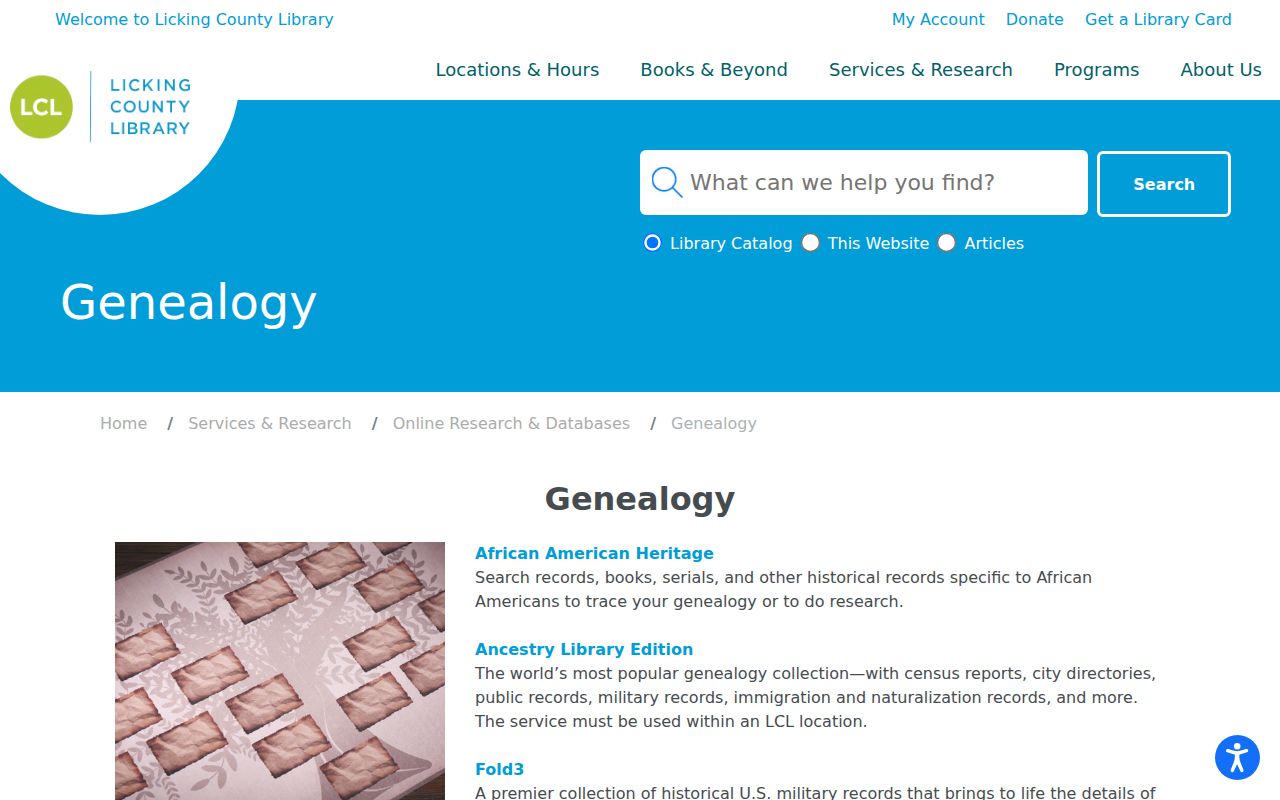
An in-library database can fill a listed year, but it should still be compared with the printed or microfilm source when a detail matters.
Note: Record the edition date and access format with every Newark directory citation, since the same year may be available through more than one library channel.
Read Newark City Directory Entries
No representative Newark page scan or abbreviation key was verified for the full run. That limits what can responsibly be called a standard entry. Instead of assuming an occupation, relationship, or ownership mark, copy the features that actually appear in the chosen edition. The most reliable inventory is therefore a transcription checklist, not a manufactured sample entry.
| Printed name | Copy the spelling, initials, and order exactly as the target Newark volume shows them. |
|---|---|
| Street form | Record the house number and street form as printed, then compare it with later maps only after preserving the original form. |
| Printed notation | Transcribe a mark only after checking that edition’s title and abbreviation pages for its meaning. |
| Edition identity | Keep the volume year and title information with the note so nearby city directories are not blended together. |
- Criss-cross directory
- An address-to-name arrangement. Newark’s verified example is Polk’s 1996 and 1997 Cross Reference Directory, not every volume in the run.
- Householder index
- A term for an index pointing to a household’s listed lead name. Confirm that the particular Newark edition contains one before relying on it.
- Abbreviation key
- The target volume’s page for interpreting its printed shorthand. Inspect it before assigning meaning to any notation.
A city directory listing can supply a dated name-to-address signal. It cannot alone prove property title, current residence, or a complete household. Compare an address finding with a deed or parcel source for ownership questions, and use a census or family record when the question is who belonged to a household.
Trace Newark City Directory Households
A household trail gains strength by moving one edition at a time. Choose the directory year nearest the family event, locate the name in the alphabetical sequence, and preserve the street number and road form before trying to modernize either. If the address falls in the two verified Polk years, the cross-reference collection supplies a separate way to check that address against a listed name.
- Start with the Newark directory edition closest to a birth, marriage, death, school year, or move already supported by a family source.
- Copy the exact printed name and address, along with the volume date and any notation confirmed by that edition’s own key.
- Check the directory before and after it to identify an address change, spelling shift, or a break in the listing.
- Use Polk’s 1996 or 1997 cross-reference volume only when the search falls in those verified years, then compare the address result with the alphabetical listing.
- Pair the sequence with a census, a deed trail, and a dated newspaper or obituary source before drawing a family conclusion.
A name that vanishes may reflect a move, death, a changed spelling, a different directory practice, or an unlisted person. The published directory cannot decide among those possibilities on its own. Telephone books provide a later subscriber layer, while property and recorded-document files describe different relationships to an address.
Newark City Directories and Census
Federal census records offer a household snapshot that can test the gaps between Newark city directory editions. Licking County Library lists local census microfilm for Licking County from 1820–1880 and 1900–1920. For national access, the public census release rule is 72 years, so census records do not offer a route for recent household research. Use the directory year, street form, ward context, and a map to select a plausible census page rather than matching on surname alone.
The National Archives census research service explains the federal census access route and release framework.
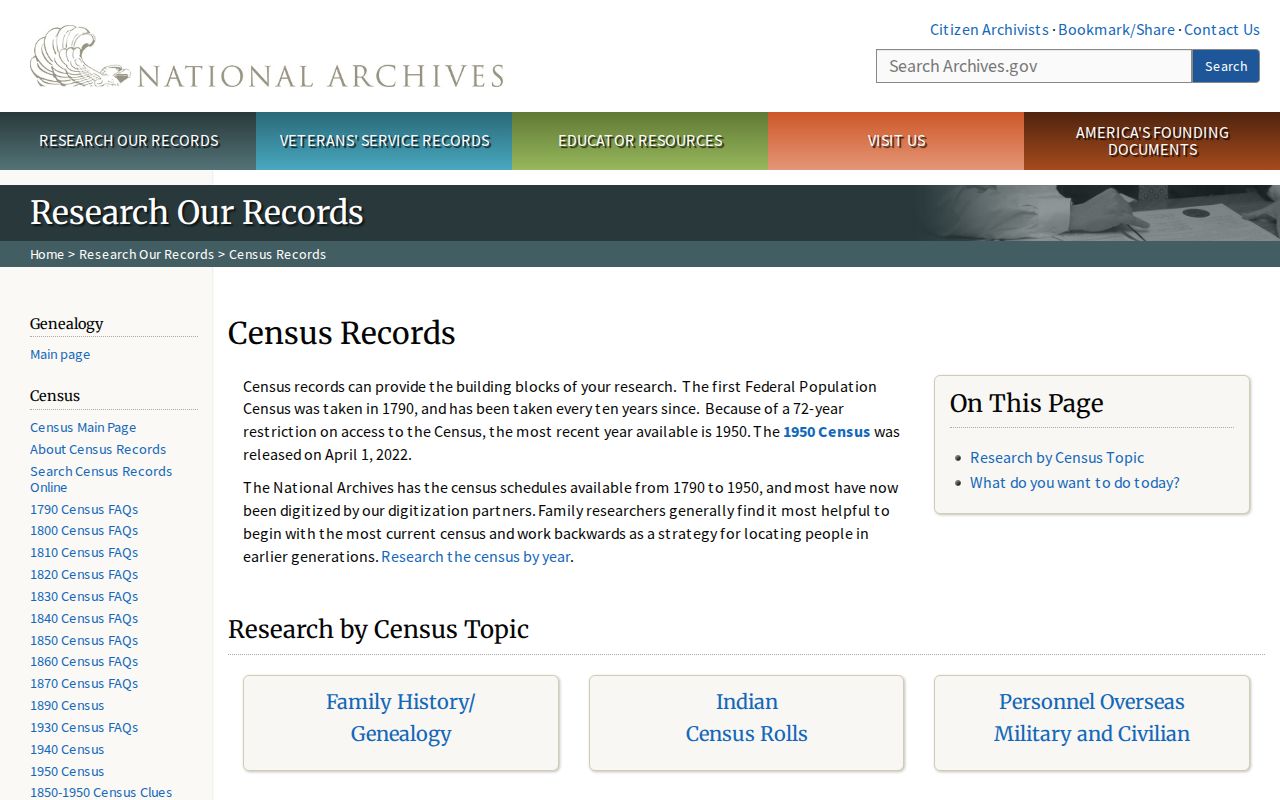
Comparing a directory entry with a census page can identify a time period for a household without treating either source as a permanent address record.
For difficult address changes, the library also holds an 1817 Newark plat map, a c. 1910 city map, a 1952 street map, a 1957 annexation map, a Newark/Heath map, a 1950 zoning map, and a street index. Those aids can explain why an older printed street form does not fit a current map.
Newark Directory Newspaper Checks
Directories establish a year-bound listing. Newspapers can help test an event around that listing. The library’s searchable Newark Advocate service covers articles and obituaries from 1929 to current, while the Local History guide lists Newark Advocate microfilm from January 9, 1822 to present with gaps. A dated notice may help with a move, death, organization, or local event, but it should be read as its own source rather than folded into the directory entry.
The Licking County Library newspapers service provides the Advocate access path.
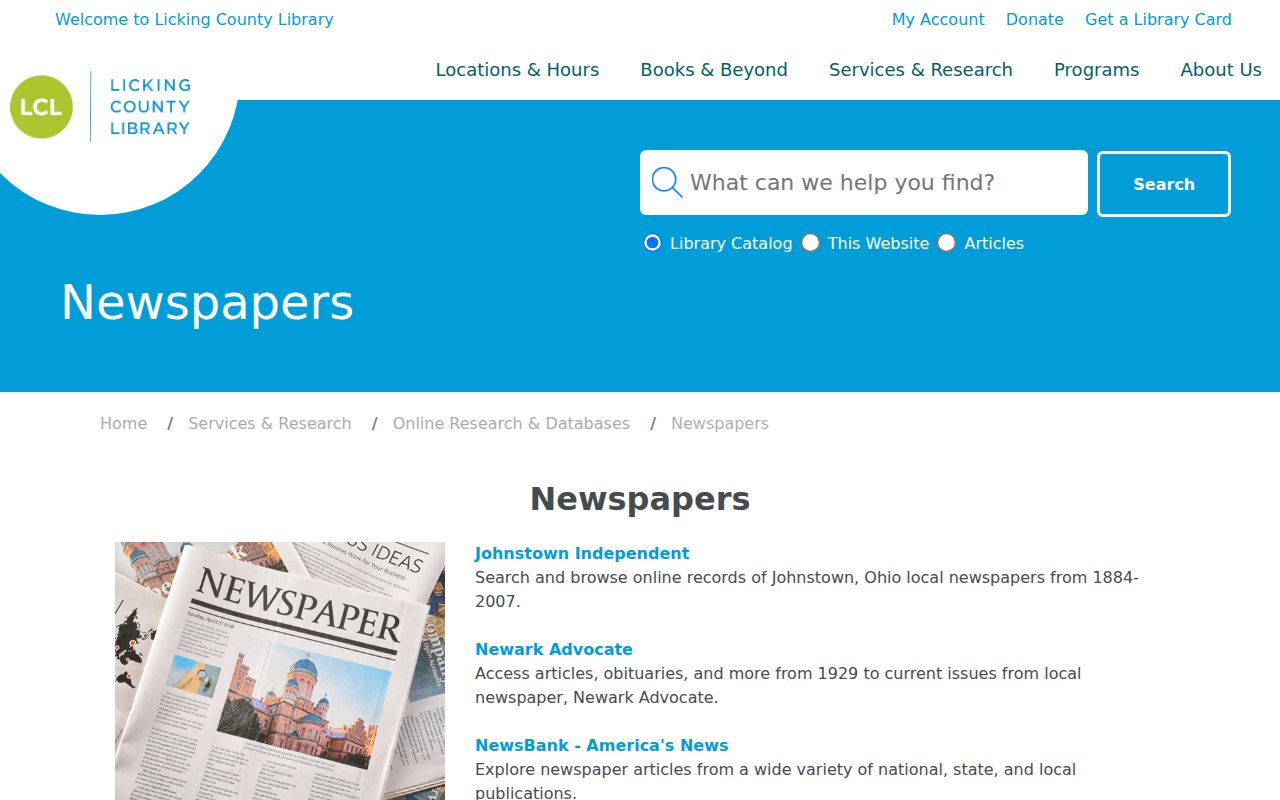
A newspaper date beside a directory year can narrow a timeline while leaving the source types distinct.
The guide also lists the Parkinson obituary collection for 1927–1953 with a name index and more than 100 Parkinson Papers surname folders. Newark’s German-language Newark Express ran from December 1894 through October 1917. Other listed titles include Newark Weekly American from January 1878 to March 1898, with a 1894 gap, and documented Newark Leader runs for 1917–26 and 1940–42.
Note: Use a newspaper notice to confirm a dated event or spelling, not as a substitute for the edition-specific information in a Newark directory.
Newark Directory Maps and Blocks
Sanborn sheets put an address back on its block, which is useful when a Newark city directory prints an old street form. Licking County Library lists Newark Sanborn microfilm for 1884, 1889, 1893, 1899, 1905, 1912, and 1920, with early editions including Granville. The Library of Congress describes an 1889 Newark map with 13 sheets, a 1920 edition with 87 sheets, and a 1920–December 1961 edition with 93 sheets.
Library of Congress Sanborn map records are a useful second access channel when an edition is not at hand locally. A sheet can establish building or block configuration at a date. It does not create a roster of everyone who lived there. Use a directory, census, or other name-bearing record for the person side of the trail.
Newark’s maps also span the 1817 plat through twentieth-century city, annexation, zoning, and street-map material. That local sequence helps distinguish a changed street name or ward boundary from an apparent move.
Newark Directory Research Desks
Newark’s historical collections are split by custody. The library and its Local History materials hold the city directories, newspapers, maps, and local genealogy resources. Licking County Genealogical Society is housed at the Downtown library and accepts research requests. Its listed basic surname research costs $30 and can include vital, cemetery, obituary, family-group, census, and city-directory work. That is a research-service option, not a promise of a match.
Licking County Library
Use for Newark city directories, telephone books, newspapers, maps, microfilm, and in-library genealogy resources.
Licking County Genealogical Society
Use for specialized surname research and county materials that include directories, census, cemetery, and local-history work.
Licking County Records & Archives
Use for historic county-government records, not for newspapers, city directories, church records, or unrelated private collections.
Licking County Records & Archives preserves a different record layer: county-government material in paper, microform, and electronic formats. The division of holdings prevents a wasted trip. For a directory or obituary question, start with LCL or LCGS; for a county-created court, recorder, or archival file, use LCRA.
Newark City Directory Gaps
The 1875 courthouse fire destroyed many early county records that had been stored in the courthouse attic. Surviving volumes, fragments, transcriptions, maps, and newspapers still matter, but a missing early government record cannot prove the history is absent. The Newark directory shelf, tax microfilm, Sanborn maps, and newspapers form a practical recovery route when an official series has a gap.
Directories also have their own limits. They are published snapshots and their holdings have gaps. Pair a directory finding with the record type that answers the real question: census for a historical household view, recorded instruments for a property transaction, a newspaper or obituary for a dated event, or a cemetery source for burial context. A prior-address project can then continue through the previous residents search without treating one directory line as final proof.
Note: When a Newark listing or official file is missing, preserve the search year, collection, and access route so another source can be checked without repeating assumptions.